






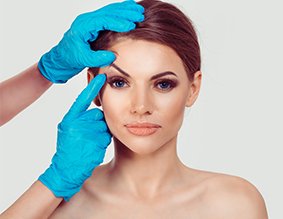

Two people can have similarly shaped eyes but require different approaches to double eyelid surgery. One may have thin eyelid skin with little excess tissue, while the other may have thicker eyelids or loose skin that affects crease formation.
This is why choosing between different double eyelid surgery techniques involves more than deciding how prominent you want your eyelid crease to look.
Understanding your natural anatomy helps explain why a plastic surgeon may recommend one surgical approach over another.
Key Takeaways
- Double eyelid surgery techniques include non-incisional, partial-incision and full-incision approaches.
- Your natural eyelid anatomy matters more than simply whether your eyes are small, round or almond-shaped.
- Skin thickness, excess fat, eyelid laxity and existing creases can influence technique selection.
- The most suitable approach depends on your anatomical features, medical assessment and desired appearance.
What Are the Main Double Eyelid Surgery Techniques?
Double eyelid surgery, also known as Asian blepharoplasty, creates or defines an upper eyelid crease in individuals who naturally have a single eyelid or an indistinct crease. There are three commonly used approaches,
Non-incisional technique
This approach uses small sutures to create an attachment between the skin and deeper eyelid structures, forming a crease without a continuous surgical incision.
It may be considered for individuals who have,
- Relatively thin upper eyelid skin.
- Minimal excess skin.
- Limited excess fat around the upper eyelid.
Suitable eyelid anatomy for crease formation using sutures.
The technique generally involves less tissue disruption, although the crease may become less defined or loosen over time in some individuals.
Partial-incision technique
As the name suggests, this approach involves small incisions rather than a continuous incision along the eyelid.
It may be considered when some tissue adjustment is required but a full-incision approach is not necessary. Depending on the surgical plan, it allows selected tissue to be addressed while creating an eyelid crease.
Full-incision technique
This approach involves an incision along the planned eyelid crease. It allows the surgeon to address underlying tissues, including selected excess skin or fat, where appropriate. It may be considered for individuals with,
- Thicker upper eyelid tissue.
- More noticeable excess skin.
- Prominent eyelid fat.
Existing eyelid folds that require structural adjustment.
Each approach has different considerations, including healing, scarring and crease durability.
How Does Your Natural Eye Shape Influence the Choice?
Eye shape provides a starting point, but it does not determine the surgical technique on its own. A plastic surgeon may assess several anatomical characteristics,
- Eyelid thickness- Thicker eyelids may require a different approach to crease formation compared with thinner eyelids.
- Skin laxity- Loose or excess skin can influence whether tissue removal or adjustment is considered.
- Fat distribution- The amount and position of upper eyelid fat can affect how prominent a crease appears.
- Existing eyelid crease- A faint, uneven or partially formed crease may require a different surgical plan.
- Eyelid muscle function- Conditions such as ptosis, where the upper eyelid droops due to an underlying muscle or tendon issue, may need separate assessment.
For example, someone with naturally thin eyelids and an existing faint crease may be assessed differently from someone with thicker eyelids and significant excess skin.
Does Your Desired Eyelid Appearance Matter?
Yes. The intended crease also influences surgical planning. Some individuals prefer a subtle crease that follows their natural eyelid contour, while others may prefer a more visible fold.
The surgeon may consider,
- Crease height and position.
- Whether the crease should appear parallel or tapered towards the inner corner.
- Natural facial proportions.
- Differences between the left and right eyelids.
However, the requested appearance must be considered alongside what is anatomically appropriate. A particular crease design may not be suitable for every eyelid structure.
What Should You Discuss Before Choosing a Technique?
Before deciding on surgery, discuss the practical differences between the available approaches with your plastic surgeon.
Some useful questions you could talk about before going ahead are,
- Which anatomical features influence the recommended technique?
- Would excess skin or fat need to be addressed?
- What are the limitations of the proposed approach?
- What are the possible risks, including asymmetry, scarring or changes in crease definition?
- What should I expect during recovery?
Understanding these considerations can help you make a more informed decision rather than selecting a technique based solely on photographs or online comparisons.
Frequently Asked Questions
Is non-incisional double eyelid surgery suitable for everyone?
No. It is generally considered for individuals with suitable eyelid anatomy, including relatively thin skin and minimal excess tissue. A clinical assessment is needed to determine suitability.
Does incisional double eyelid surgery leave a scar?
An incision creates a surgical scar along the eyelid crease. Its visibility varies depending on individual healing, surgical technique and other factors.
Can double eyelid surgery correct droopy eyelids?
Not necessarily. Drooping caused by ptosis may involve the eyelid-lifting muscle or its supporting structures. This requires separate assessment and may need a different surgical procedure.
Can the results of non-incisional surgery become less defined?
Yes. Sutures may loosen or the crease may become less prominent over time. Individual results vary depending on eyelid anatomy and other factors.
How long does recovery take after double eyelid surgery?
Recovery varies according to the surgical technique and individual healing. Swelling and bruising may occur, and the eyelid crease can take time to settle into its appearance.
Schedule a Consultation to Find an Approach That Respects Your Natural Eye Shape
Choosing between double eyelid surgery techniques requires careful consideration of your eyelid anatomy, existing features and desired appearance. There is no single approach that is suitable for everyone.
If you are considering double eyelid surgery in Singapore, a consultation with Dr. Yeap at Yeap Plastic Surgery can help you understand the available techniques and the factors that may influence your surgical plan. An individual assessment allows you to discuss your expectations, possible limitations and relevant surgical considerations before making a decision.
