









Perfectly symmetrical breasts are uncommon. One breast may naturally have a little more volume, sit differently on the chest wall or have a slightly different shape from the other.
For some people, however, the difference is more noticeable and may become a concern when choosing clothing or when looking at the overall breast shape. This can raise an interesting question: can correcting breast imbalance always mean making both breasts the same size?
Not necessarily. In selected cases, adding a small amount of a person’s own fat to specific areas may help adjust differences in breast volume or contour. This is one of the considerations behind fat grafting for breast asymmetry.
Key takeaways
- Breast asymmetry can involve differences in volume, shape, position or underlying anatomy.
- Fat grafting uses fat taken from another part of the body and transfers it to selected areas of the breast.
- It may be considered when relatively small changes in volume or contour are needed, but it cannot correct every type of asymmetry.
- Some of the transferred fat may not survive, so the final result can vary between individuals.
- An assessment is needed to determine whether fat grafting is appropriate and what degree of correction may be realistic.
What can fat grafting actually change?
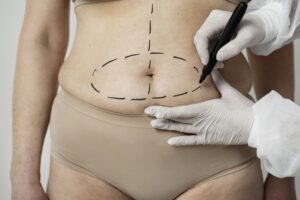
Fat grafting involves removing fat from a suitable donor area, processing it and placing it into specific areas of the breast.
The important part is that the fat does not have to be added evenly across the whole breast.
Depending on the individual’s anatomy, it may be placed selectively to address differences in fullness or contour. For example, if one breast has slightly less fullness in a particular area, a surgeon may assess whether adding volume there could improve the overall balance.
However, breast asymmetry is not always caused by a simple difference in volume. It can also relate to,
- Differences in breast shape or position
- Chest wall or rib cage anatomy
- Skin or tissue differences
- Previous surgery or trauma
- Changes following pregnancy or weight fluctuations
This is why two people with apparently similar asymmetry may not be suitable for the same approach.
Does adding fat mean the breasts will become symmetrical?
The aim of treatment is generally to address the specific differences identified during assessment rather than promise identical breasts.
Some of the transferred fat may be absorbed by the body over time, and the amount that remains can vary between individuals. There can also be limits to how much correction is appropriate in a single procedure.
A consultation therefore involves more than simply deciding how much fat to add. The surgeon needs to consider the existing breast tissue, skin quality, proportions and the amount and availability of donor fat.
Could fat grafting be an option for every type of uneven breast?
No. The reason for the asymmetry matters.
If the difference is mainly related to volume, selective fat transfer may be one option to consider. If there are substantial differences in breast size, significant drooping, marked differences in position or other structural concerns, another surgical approach may need to be discussed.
In some situations, a combination of procedures may be considered. The appropriate option depends on the individual’s anatomy, previous procedures, health and treatment goals.
What are the limitations and risks of the procedure?
Like other surgical procedures, fat grafting has potential risks. These can include infection, bleeding, changes in sensation, contour irregularities and areas of fat necrosis, where transferred fat does not survive.
Fat transfer can also affect how breast tissue appears on imaging. If you undergo the procedure, it is useful to tell healthcare professionals involved in future breast screening or investigations about your surgical history.
Frequently Asked Questions
Can fat grafting be used to correct a small difference between the breasts?
It may be considered when the difference is primarily related to localised volume or contour. Whether it is suitable depends on the individual’s breast anatomy and available donor fat.
Where does the fat used for breast grafting come from?
Fat is usually collected from another area of the body where there is sufficient tissue for harvesting. The suitable donor area varies from person to person.
Will the transferred fat stay permanently?
Not all transferred fat necessarily survives. The amount retained can vary, which means the eventual degree of correction cannot be guaranteed.
Can fat grafting correct breast shape as well as size?
It can sometimes be used to adjust specific areas of contour, but its ability to change overall breast shape depends on the underlying anatomy and the nature of the asymmetry.
Is fat grafting suitable after previous breast surgery?
It may be considered in selected situations, including some cases where previous surgery has contributed to contour differences. A surgeon would need to assess the existing tissue and surgical history first.
Book a consultation to learn more about correction for uneven breasts
Breast asymmetry is individual, and the most appropriate approach depends on what is causing the difference rather than simply how noticeable it appears.
For those considering fat grafting for breast asymmetry, an assessment with Dr. Yeap Choong Lieng at Yeap Plastic Reconstruction and Cosmetic Surgery can help determine whether fat grafting is a suitable consideration and explain its potential limitations, alternatives and risks for the individual’s circumstances.
